
The Self-Transcending Image
Everything is made to be negated

This essay is a continuation of Why Aesthetics Are the Key to Salvation and True Beauty is Chaste. It represents something of a rambling flash-nonfictionish essay on aesthetics. It’s way too long for a single post so I’ll dole it out in installments whenever the opportunity presents itself. Please note - this is not a polished, crafted piece of writing. It’s more like me thinking out loud with you all. I’d be glad for any feedback or development on the thoughts herein, including pushback.
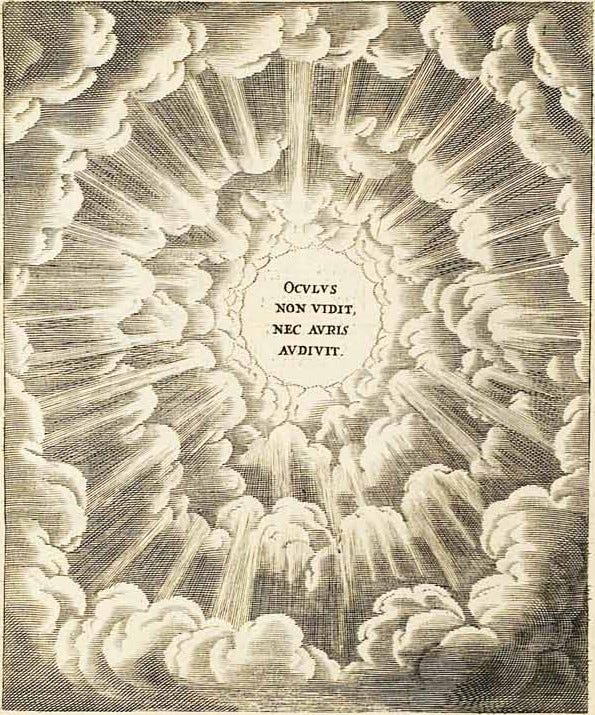
It is very much true that the sacraments participate in a reality that, once we enter fully into it in the next life, will no longer require the symbol to mediate. But we cannot anticipate such a reality by disregarding symbols in the current life. We are not purely intellectual beings. Rather, we receive intelligible forms through sensible things. The iconic nature of the cosmos is the key to sacred knowledge.
The attempt to move past symbols into disembodied spirituality, abstracted intellect, or even apophaticism disconnected from the lower rungs of the ladder is to fall into the error that grace destroys nature. Grace does not destroy but perfects. We struggle with the process, though, because for us to be perfected is purgative and, in some way, the “selves” we thought we were must be dispossessed. This does not mean we become nothing or that our desire for sensible beauty dies within us. We always remain creatures of eros. The dispossession is more the nature of a gift by which we hand everything that we are over into the care of the bridegroom. Our body is now his. It is he who dreams with and in us. It is he who desires in us.
Denys Turner, in his book The Darkness of God, explains our apophatic unselving in terms of the Augustinian triad, writing, “As intellect we are dispossessed by faith...As memory we are dispossessed by hope...the will is set free to be drawn away from its own possessiveness into the incomprehensible darkness of love.” Every human faculty is chastised into faith, hope, and love.
Notice that we don’t abandon our human faculties but, rather, experience their perfection through grace. The imagination is self-humiliating, and every image joins to the Image. The dialectic contains both cataphatic and apophatic, God is the Lord of both. The self is likewise negated in humility while simultaneously manifesting its full divinized adoption into the Image. Glory and chastity, lowness and magnificat, un-selving and discovering the very ground of our being, these are all linked in the Incarnational synthesis.
Divine action does not annihilate but creates. If the creative light is too bright, if it feels like pure destruction and apocalyptic bloodshed, that’s only a matter of perspective. We cannot shy away from the chastening of our senses. The apophatic step must be taken otherwise the imagination is bereft of its source of power. That power frightens us because, as Gaston Bachelard notes, “The poetic image sheds light on consciousness in such a way that it is pointless to look for subconscious antecedents of the image.” In other words, there is nothing within us that could possibly have generated the surplus of meaning that pours out of a symbolic image. The poetic image is a “phenomenology of the soul,” Bachelard writes. It connects with something deep inside of us that creates, sustains and, ultimately, surpasses us. At the core of the self is a mystery. We are walking, talking mysteries.
This cannot be reduced to mere experience. Remember, unrestrained surface pleasures lead to the reduction of the image through a misunderstanding of the aesthetic mindset. Beatific vision is a manifestation of relationship, the crossing of two gazes in which life sparks and flashes, a sensible metaphysic. Of such a divine gaze who can speak? At some level, we are helpless to experience our own salvation, unable to describe or even identify the action of grace within us. Beauty enters us into a dark night of the senses.
It gathers all of our experience, emotions, desires, passions, thoughts, and loves and plunges us into the depth of re-making baptismal waters. My reborn feet will stride the streets of gold not as a tourist but a participant. Salvation is an embodiment, a fruition of the entirety of our lives brought under the aspect of grace. Aesthetic rapture is our clue; there is something within us that is precious and cannot die. The soul deserves to be honored, not given away lightly to passing sensible pleasures but instead made into an offering. The consolation is made into a sacrifice, the aesthetic rapture voluntarily renounced. Only in such a way is the fragrant beauty allowed to rise. Only thus chastened can we become song, rising flame.
The healing of the senses is not for the sake of the senses themselves, as if theology begins and ends in the practical. The healing of the senses is for the sake of submitting our experience to unified, intelligible concepts so as to reach through them to the ineffable, for the building up of thought, the hard work of puzzling out our place in the world and how to understand our relation to God. In other words, we are seeking to move into and through the senses into the heart of the real. This is why the senses must be chastised and purified. They are directed up the analogia entis, from the named to the nameless, from the particular to the universal, immanence to transcendence, from the parts to the whole.
Chastity seem a weakening of our sensible powers because it causes a curtailing of unfettered desire, but it is actually freedom because it makes space for the senses to be taken up into the Incarnation and healed. Thomas Pfau writes, “An integral feature of apophatic theology, the symbol had for more than a millennium been grounded in a stance of epistemic humility.” The reason an embodied symbol can be linked to apophatic negation is because the symbol is not made by man but, rather received. It arises from divine silence and returns to it. It is a gift by which the invisible is made visible, the unheard is heard.
The poetic image is self-renouncing. Consider, for instance, Gerard Manley Hopkins enthusiastically rattling off a litany of “dappled things.” The tumble of images serves not to overwhelm the reader with noise but, rather, to overwhelm with silence. It is clear that the words are analogues revelatory of the Word. They situate themselves within his reality to praise him and draw all attention to him. The profusion of beauty to which Hopkins points is the multiplication of humility and adoration. Thus chastened, the images are fit, as it were, into their place in a stained glass window, the whole greater than the sum of the parts and glowing with light that both originates beyond it and travels beyond it, although even as it goes on it is colored by the glass. The pure light condescends to allow the brittle glass to participate in its purity.
An ongoing relationship is created through aesthetic participation. We are disciplined into the relationship by submitting our senses to intelligible truth. The will is submitted to these radiant truths and formed by them, squeezed through the olive press of Gethsemane. Beauty brings us to a decision point - to choose Christ. Beauty doesn’t invoke self aggrandizement but, rather, knowledge ordered towards obedience.
St. Maximus teaches, “All of sensible creation is a unity in the intelligible order.” Further, that Christ possesses a “body and its sensations, and a soul like ours, and an intellect, through all of which he binds together the parts.” On their own, fragmentary sensations, even if they carry some hint of beauty, are not sufficient. Every single thing needs the Cross. Even beauty must be taken into the grave so as to be placed in the care of the rising Christ.
Our participation in beauty saves, yes, but only by bringing us to Beauty himself. In its natural activity it is powerless. Chastity is not escape from senses but their fulfillment. It searches out the one who makes beauty whole and puts us on the way. We become smaller in the world, humbled so as to discern hidden, eternal meaning unveiling its face in and through individual creatures. Ontology is poetic.
“The totality of the intellectual world appears mysteriously in sensible forms…” writes St. Thomas Aquinas, observing that nothing is found in the intellect that is not first in the senses. The imaginative faculty, or the “storehouse of forms,” must be informed by real things. The imagination as it develops and explores those things makes them even more real, and the movement of wonder and beauty from the part to the whole is our clue that the world beyond this one is the source of reality. It is slowly remaking our world and chastening us to the purifying fire by which we are made ready to receive higher goods. Everything is becoming more beautiful.
Thank you for making me think and look up definitions of words..."apophatic," and "cataphatic."
I've always struggled with the way people talk about apophatic theology. Not because I really disagree, and I go that way of unknowing pretty often, being either delighted or distressed by how ineffably beyond God is. There just seems to be this way of talking about the apophatic as if it's more grown-up and we're meant to leave the cataphatic behind for what's somehow more true. Anyway, this essay helped me to understand that apophatic and cataphatic together, especially the part about the apophatic as a kind of chastening. Thanks for that!